Trotwood
The Outsider (Stephen King Edition)Trotwood is the Ohio community where Amber Howard and Jolene Howard disappeared and were found dead, making it the geographic center of a case that connects local evidence to a much wider investigation. School and shop records establish the sisters’ movements; the ravine where their bodies were found becomes both a public memorial and a place associated with the grief that draws the Outsider. The investigation also places Trotwood within a regional map extending to Dayton and Regis, where Terry Maitland and Heath Holmes were present during the same period.
Setting and Regional Context
Trotwood is presented in relation to nearby Dayton and Regis rather than through an extended account of the town itself. Holly Gibney’s review of local newspaper archives places the sisters’ disappearance and the discovery of their bodies within the news of the surrounding area. The chronology gives Trotwood a concrete role in the investigation: it is close enough to Dayton for the case to intersect with Terry Maitland’s family visit, and close enough to Regis for investigators to examine Heath Holmes’s stated vacation plans.
The surrounding geography supplies investigative leads as well as context. The girls’ home was about a mile from the ravine where their bodies were discovered, while they were later seen at a small grocery and beer store about five blocks from their school. These distances make the case legible through ordinary routes—school, local shops, home, and a nearby ravine—before its implications expand beyond the town.
The Howard Sisters’ Disappearance and Deaths
Amber and Jolene, two sisters from Trotwood, skipped school on April 23. Amber had a free period, and Jolene said she needed to use the bathroom; investigators later considered that they may have planned to leave together. Shortly before noon, a surveillance camera at a small store five blocks from the school recorded them inside. The clerk knew they should have been in school and refused to sell to them. The still image, showing the girls with drinks and candy, became a specific record of their movements on the day they disappeared.
A postman found the sisters’ bodies in a ravine about a mile from their home after noticing a large gathering of crows and stopping to investigate. The discovery transformed a missing-person search into a murder case. The local newspaper reported the deaths on April 25, describing the circumstances in strongly condemnatory terms; Holly’s archive search identifies the report as a turning point in the public chronology.
The investigation also records the girls’ circumstances without making them responsible for what happened to them. They lived in a low-income household, their father was absent, and the school had classified them as at-risk students; they had skipped school before. These facts help explain the institutional and social context in which their disappearance unfolded, but do not diminish the crime or shift blame onto the sisters.
Investigation and Competing Timelines
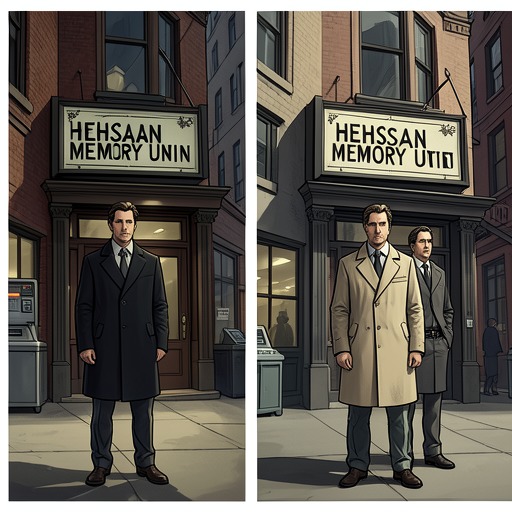
Heath Holmes, a Dayton resident employed as an orderly at the Heisman Memory Unit, told coworkers he planned to spend his one-week vacation with his mother in Regis. The discovery of Amber and Jolene’s bodies fell midway through that vacation week. A local account later reported that Holmes had been seen and that gas-station surveillance showed him filling up a vehicle, although the witness Holly interviews is uncertain about what vehicle it was. These details contributed to suspicion but do not, by themselves, establish what happened at the ravine.
The case’s significance to the larger investigation comes from the convergence of locations and dates. Terry Maitland had been in Dayton with his family during the period in which the sisters were killed; Holmes was also connected to the area through his residence and employment. Holly’s search through the newspaper archive follows the events from Merlin Cassidy’s disposal of the van on April 19, through the girls’ disappearance and deaths, to the police announcement on April 28 that they were questioning a person of interest and Holmes’s arrest two days later. Trotwood thus becomes a fixed point in an unsettling pattern of overlapping identities, travel, and criminal accusations.
Memorial and Narrative Significance
Three months after the sisters were found, Holly visits the ravine. An older man in Trotwood Community Park gives her directions to the place where the girls had been discovered. She finds that mourners and other visitors have turned it into an improvised shrine: cards bearing words of sorrow and hope, balloons, a statue of Mary, and a teddy bear left among the offerings. Holly photographs the site on her iPad. The memorial preserves the public aftermath of the murders in a landscape that the investigation also treats as a potential point of contact with the Outsider.
Holly distinguishes the community’s grief from the darker interest of people who might visit to dwell on the violence. In her account, the Outsider could have come to the shrine after the bodies were discovered, drawn by the sorrow of mourners and the excitement of those fascinated by the crime. The ravine therefore carries two linked meanings: it is the place where the sisters’ disappearance ended in death, and a site where the consequences of that loss remain visible. Trotwood’s narrative role is not simply to supply a crime scene; it anchors the case in a community whose ordinary streets and public records expose the route by which a local tragedy enters the book’s larger mystery.